
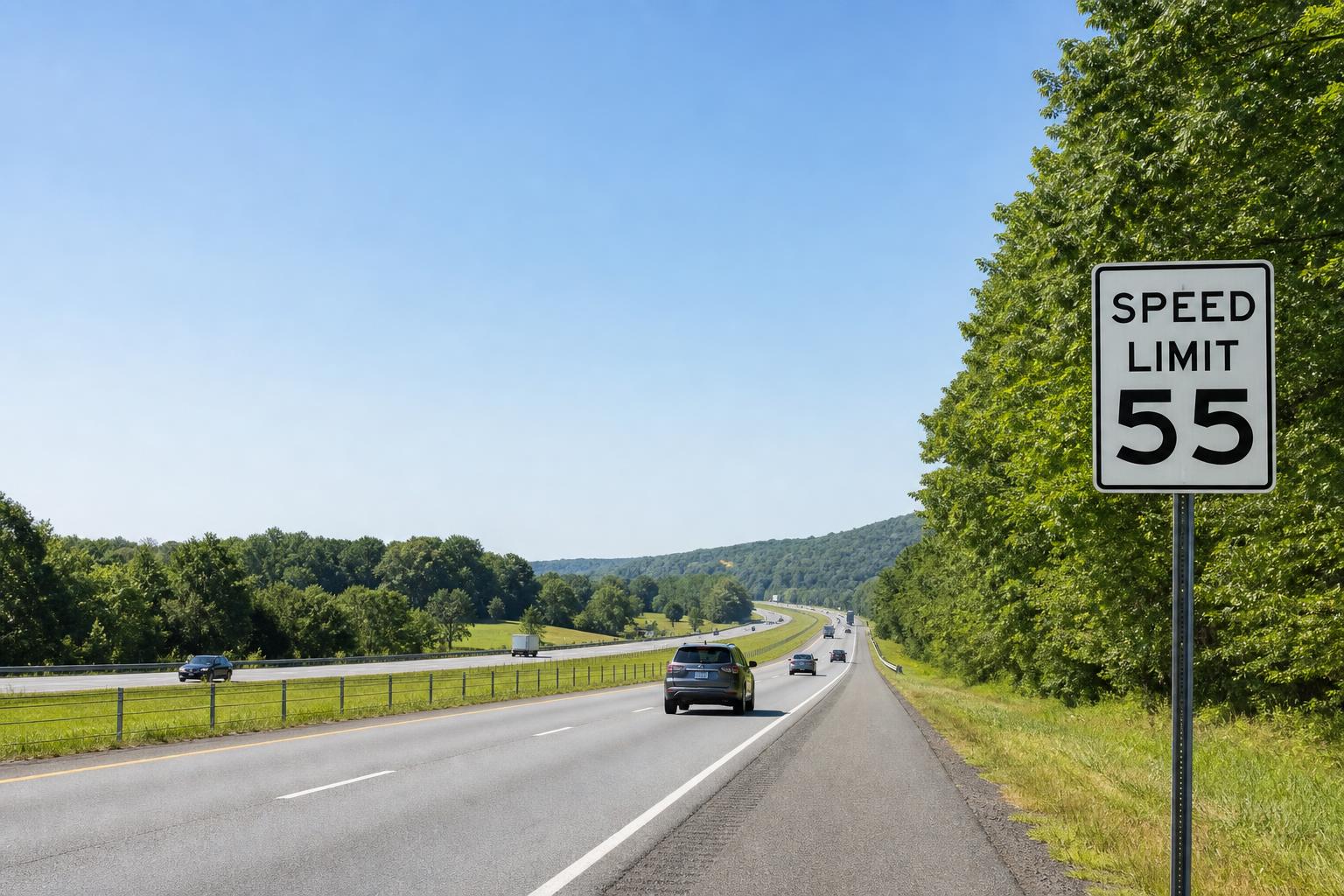
1. Is speeding a traffic infraction in Virginia?
Ordinary speeding is generally handled as a traffic infraction. Virginia has several statutes governing maximum speeds depending on the type of road, location, vehicle, and other circumstances. The statewide rules are found primarily in Article 8 of Chapter 8 of Title 46.2 of the Virginia Code.
The posted speed limit is important, but it is not the only thing that can matter. Virginia law contains separate provisions addressing speed limits in particular locations and circumstances, including business and residential districts, cities and towns, school crossings, highway work zones, and certain specially designated areas.
2. How many DMV points does a Virginia speeding conviction carry?
Virginia DMV assigns demerit points after a traffic conviction, and the number depends on the particular violation.
Virginia DMV currently lists speeding 1–9 mph above the posted speed limit as a three-point violation and speeding 10–19 mph above the posted speed limit as a four-point violation.
DMV lists speeding convictions in these categories as remaining on the driving record for five years.
Demerit points themselves are different from the length of time the conviction remains on the driving record. Virginia DMV states that demerit points remain valid for two years from the offense date.
Virginia DMV Demerit Points and Driver Improvement provides a fuller explanation.
3. Can I just pay my speeding ticket?
Some Virginia speeding charges are prepayable. If your offense is eligible for prepayment, paying it can avoid the need for a court hearing.
But there is an important consequence: prepayment is not simply paying a bill to make the case disappear. The Virginia Judicial System explains that prepaying a qualifying traffic offense results in a guilty disposition, and DMV consequences may follow from the conviction.
Whether prepayment makes sense is a decision for the individual driver. Before paying, read the summons carefully and understand the charge and the possible consequences of a conviction.
Reckless driving cannot be prepaid.
4. How much is a Virginia speeding ticket?
There is not one flat amount for every Virginia speeding case.
For offenses eligible for prepayment, Virginia Code § 46.2-878.3 generally provides for a scheduled fine of $6 for each mile per hour over the posted speed limit.
Different per-mile amounts apply to certain violations involving school crossings, highway work zones, and residential districts.
The statute also provides an additional $100 fine for driving over 80 mph but below 86 mph on a highway with a maximum speed limit of 65 mph.
Court costs and other statutory amounts may also apply.
Special locations and circumstances can carry enhanced penalties. Because the amount can depend on the particular charge and location, drivers should use the information on their summons and the applicable court’s official information rather than relying on a generic online speeding-ticket calculator.
5. Do I have to go to court?
It depends on the charge.
If the summons identifies an offense as prepayable and you choose to prepay it properly, you generally can resolve that charge without appearing for the scheduled hearing.
If you want to contest the charge rather than prepay it, the court date becomes important.
Some offenses cannot be prepaid. Reckless driving is one of them.
Always read the summons carefully. It identifies the court handling the case and the scheduled court date. Drivers can also use the Virginia Judicial System’s online case information to check court information.
6. What information should I look at on my summons?
Start with the actual charge rather than assuming every ticket involving speed is the same.
- the Virginia Code section or local ordinance listed;
- the speed alleged by the officer;
- the applicable or posted speed limit;
- the court and court date; and
- whether the offense is identified as prepayable.
Those details can help distinguish an ordinary speeding allegation from reckless driving by speed and tell you where the case is pending.
7. Can a speedometer calibration matter?
Sometimes.
A speedometer calibration can provide information about whether a vehicle’s speedometer was reading accurately. Depending on the facts of a particular case, that information may be relevant, but obtaining a calibration does not automatically result in a reduction or dismissal.
Learn more in Speedometer Calibration for a Virginia Speeding or Reckless Driving Case.
8. Should I take a driver improvement course before court?
That depends on why you are considering the course and the circumstances of the case.
A Virginia driver improvement clinic can have DMV-related consequences in qualifying circumstances, and a court may also consider course completion in an individual case.
But taking a course does not guarantee that a ticket will be dismissed or reduced, and drivers should not assume that completing a course before court will produce a particular result.
If a judge or court has specifically instructed a driver to complete a course, the driver should follow the instructions in the court’s order or documentation.
This paragraph is general educational information only.
9. Where can I check the official rules?
For the most current information, use official Virginia sources.
The Code of Virginia contains the statutes governing speed limits and reckless driving.
The Virginia DMV provides current information about demerit points, driving records, and the Driver Improvement Program.
The Virginia Judicial System provides court information, case information, and instructions concerning prepayable traffic offenses.
Because statutes, DMV policies, court procedures, and fine schedules can change, official sources should be checked for current information.
10. A ticket is an allegation — not a conviction
A traffic summons tells a driver what he or she has been charged with. It is not itself a conviction.
DMV consequences generally arise after a conviction is reported to DMV.
That distinction is also why prepaying a prepayable ticket matters: payment resolves the charge as a guilty disposition rather than simply making the paperwork disappear.
Official sources
- Code of Virginia — Article 8: SpeedOfficial Code of Virginia
- Code of Virginia — Article 7: Reckless Driving and Improper DrivingOfficial Code of Virginia
- Virginia Code § 46.2-862 — Reckless Driving by SpeedOfficial Code of Virginia
- Virginia DMV — Moving Violations and Point AssessmentsOfficial Virginia DMV information
- Virginia DMV — Demerit Point SystemOfficial Virginia DMV information
- Virginia Judicial System — Traffic Tickets / PrepaymentOfficial Virginia court information
Related Ivy articles
Educational information only